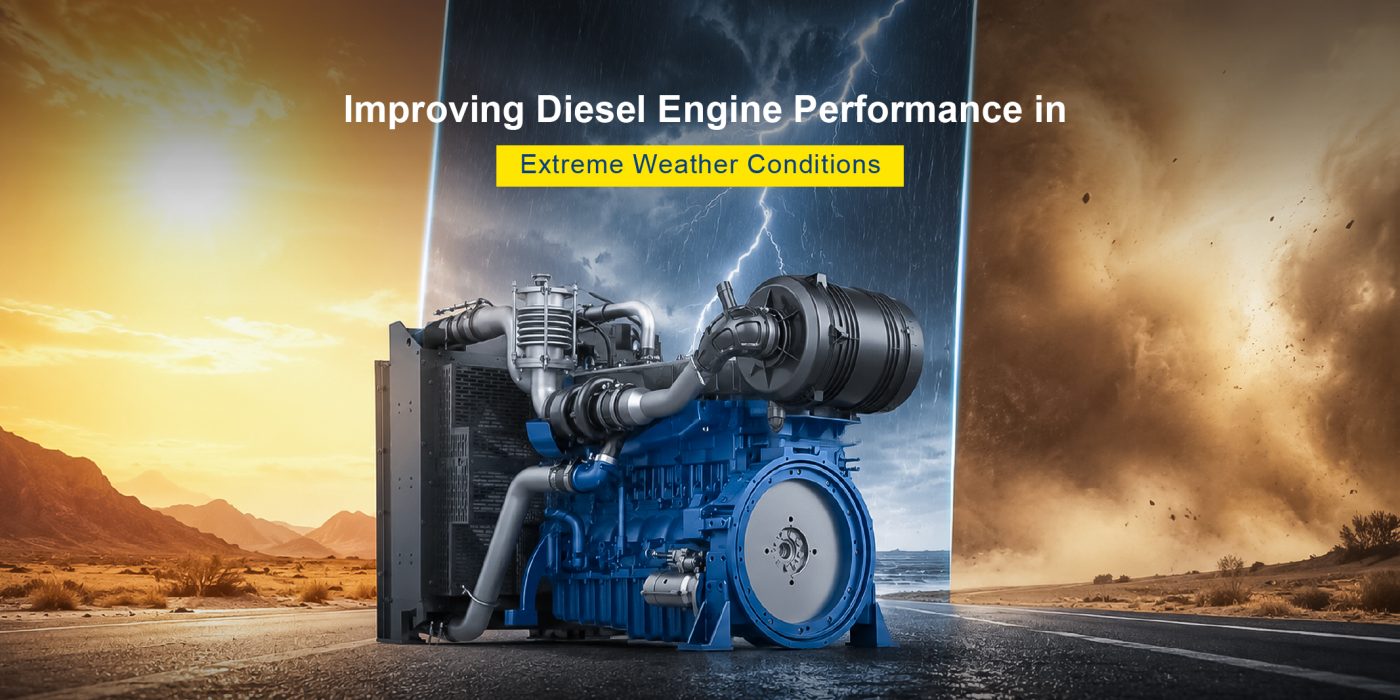
Diesel engines are built for demanding work. They power diesel generators, pumps, marine systems, industrial equipment and backup power applications. However, extreme weather can affect how efficiently they perform.
Heat, cold, humidity, dust and altitude can impact combustion, fuel flow, lubrication and engine cooling. For businesses using a diesel generator or industrial engine, this can lead to higher fuel use, downtime, maintenance issues and lower engine reliability.
| Weather Condition | Common Impact |
| Extreme heat | Higher risk of engine overheating |
| Cold weather | Hard starting and thicker diesel fuel |
| High humidity | Moisture contamination in fuel systems |
| Dusty climate | Poor air intake due to clogged filters |
| High altitude | Reduced oxygen and lower output |
Improving diesel engine performance depends on choosing the right engine, maintaining it regularly and preparing it for local weather conditions.
Why Extreme Weather Impacts Diesel Engine Performance
A diesel engine needs the right balance of air, diesel fuel, compression, lubrication and cooling. Extreme weather disturbs this balance.
In hot climates, warmer intake air can reduce combustion efficiency and increase cooling load. In cold weather, diesel fuel can thicken, batteries may weaken and oil may take longer to circulate. In humid locations, moisture can enter fuel systems. In dusty areas, blocked air filters can affect combustion. At high altitudes, thinner air can reduce power output.
For a generator engine used in hospitals, factories, data centres, construction sites or marine applications, these issues can affect performance during critical operations.
India’s diesel generator market was valued at around USD 1.37 billion in 2025 and is projected to reach USD 2.15 billion by 2034. This highlights the growing need for reliable diesel engine generator solutions across commercial and industrial sectors.
Common Diesel Engine Challenges in Hot Weather
High temperature puts pressure on the engine cooling system. When coolant, radiator, fan or airflow systems are not maintained, engine overheating can occur.
A diesel generator running under heavy summer load may face multiple problems. Coolant may lose effectiveness, radiator fins may get blocked, oil may thin out and warmer intake air may reduce combustion efficiency. This can increase diesel fuel consumption and cause sudden shutdowns.
To reduce overheating risks, operators should check:
- Coolant level and quality
- Radiator cleanliness and airflow
- Fan belt condition
- Air filter and intake system
- Load levels during peak heat
- Recommended oil grade
Hot weather maintenance should begin before summer peaks. A small cooling issue can quickly become a major failure when the engine runs under full load.
Cold Weather Engine Issues and How to Prevent Them
Cold weather creates different diesel engine performance problems. A cold weather engine may struggle to start because low temperatures affect fuel flow, battery strength and lubrication.
In cold conditions, diesel fuel can thicken and restrict filters or fuel lines. Batteries may lose cranking power, while engine oil becomes more viscous and moves slowly after startup. For a diesel engine for generator applications, this can be a serious issue because generators are expected to start immediately during power failure.
To prevent cold weather issues:
- Use the correct diesel fuel grade
- Inspect and replace fuel filters on time
- Keep batteries fully charged
- Use recommended low-temperature lubricants
- Allow warm-up before full load
- Check glow plugs or intake heaters
- Keep fuel tanks clean and dry
Cold weather care improves starting, reduces internal wear and supports long-term engine reliability.
Key Maintenance Practices to Improve Diesel Engine Efficiency
Improving engine efficiency in extreme weather depends on routine maintenance. Diesel engines in generator applications may remain idle for long periods but must perform instantly during outages.
Air filters need attention in dusty locations. Fuel filters and water separators are important in humid areas. In hot regions, engine cooling components need closer inspection. In cold regions, batteries, lubricants and fuel flow require priority.
Regular load testing is also important for a diesel engine generator. Running a generator at very low load for long periods can cause carbon deposits, wet stacking and inefficient combustion. Load testing helps confirm whether the generator engine can perform under real demand.
Weather-Wise Diesel Engine Maintenance Checklist
| Weather Condition | Common Engine Issue | Preventive Action |
| Extreme heat | Engine overheating | Check coolant, radiator, fan and airflow |
| Cold weather | Hard starting | Maintain battery, fuel quality and glow plugs |
| High humidity | Fuel contamination | Inspect fuel filters and water separators |
| Dusty climate | Poor air intake | Clean or replace air filters regularly |
| High altitude | Lower power output | Monitor load and tuning requirements |
5 Checks Before Running a Diesel Generator in Harsh Weather
- Coolant check: Ensure coolant is clean and topped up.
- Fuel check: Inspect diesel fuel quality and remove water contamination.
- Airflow check: Clean radiator fins, vents and air filters.
- Battery check: Test charge, terminals and cranking performance.
- Load check: Match load with rated capacity and avoid sudden overloading.
Choosing the Right Diesel Engine for Generator Applications
Maintenance helps improve performance, but the foundation starts with proper engine selection. A diesel engine for generator use should be selected based on load demand, duty cycle, fuel quality, site conditions and operating climate.
A data centre or hospital may need fast backup power, while a mining site or construction project may need a rugged industrial engine that can handle dust, heat and load variation.
When comparing diesel engine manufacturers in India, businesses should consider:
- Expected load demand
- Standby, prime or continuous duty needs
- Local climate and site conditions
- Cooling system capacity
- Fuel quality availability
- Service and spare parts support
- Total cost of ownership
- Long-term engine reliability
A perfect diesel engine generator selection can deliver better engine efficiency, fewer breakdowns and more predictable performance.
Conclusion
Extreme weather can affect diesel engine performance through engine overheating, cold-start issues, fuel contamination, poor airflow and reduced output. Businesses that depend on a diesel generator should focus on correct engine selection, clean diesel fuel, proper engine cooling, regular inspections and climate-specific maintenance.
Baudouin India offers reliable Baudouin engine solutions for demanding generator and industrial applications. As one of the diesel engine manufacturers in India, Baudouin India supports diesel engines for generator applications where uptime, durability and long-term engine reliability matter.