Power backup is not only about keeping the lights on. For Indian industries, it is about protecting production schedules, controlling operating costs, meeting emissions expectations, and choosing equipment that makes sense over the long run. For this reason, the debate between diesel engine vs gas engine is more relevant than ever.
Diesel Engine for Generator Applications
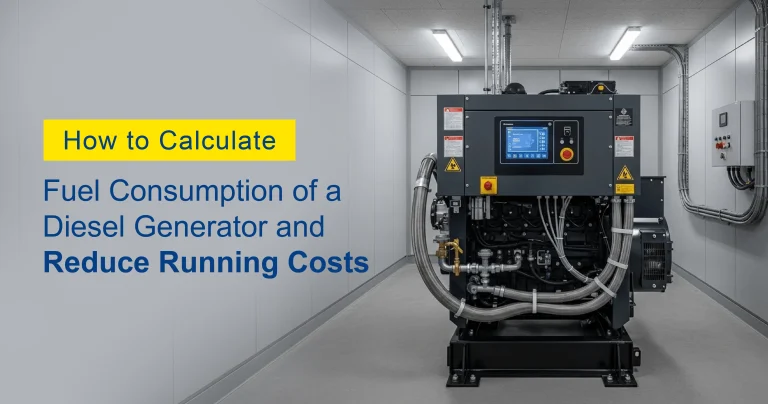
A diesel engine for generator applications is popular because diesel gensets are easy to deploy, quick to start, and suitable for sites where fuel storage is more practical than pipeline access. Diesel remains a familiar choice for backup power across factories, commercial buildings, and infrastructure projects. Powerline.
Limitations of Diesel Engines
The downside is operating cost. Fuel can account for 75–80% of the lifetime cost of a diesel genset, so price volatility has a direct impact on budgets. Diesel systems also face greater pressure from emissions compliance as Indian regulations become stricter.
Gas Engine for Power Generation
A gas engine can be a strong option where piped gas or a dependable gas supply is available. Gas generators generally offer cleaner combustion and lower local particulate emissions, making them a better fit for sustainability-focused operations.
Limitations of Gas Engines
The challenge is infrastructure. A gas generator vs diesel generator comparison often comes down to supply reliability, because gas systems depend on pipeline availability or strong fuel logistics. For remote sites, diesel is usually easier to manage, while gas works better in industrial clusters and urban facilities with access to gas networks.
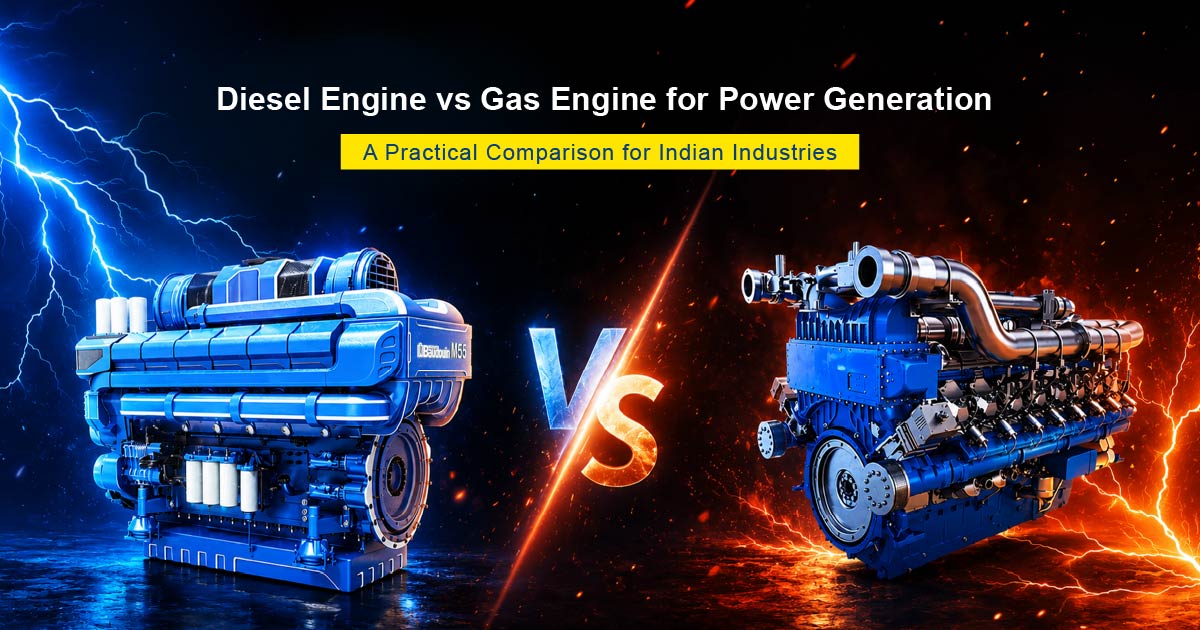
Diesel Engine vs Gas Engine
| Factor | Diesel Engine | Gas Engine |
| Fuel cost | Usually higher in long-term operation | Often lower where gas supply is available |
| Availability | Widely available and easy to store | Depends on pipeline or reliable gas logistics |
| Upfront cost | Generally lower | Generally higher |
| Emissions | Higher particulate and SOx concerns | Cleaner combustion with lower local emissions |
| Maintenance | Proven and robust, but fuel and exhaust systems need attention | Often cleaner running, but depends on gas quality |
| Best fit | Backup power, remote sites, critical standby loads | Industrial facilities with gas access and emissions focus |
The comparison shows that diesel can win on convenience, while gas can win on operating economics and emissions.
Emissions Compliance in India
India’s compliance environment is becoming more important in power planning. Diesel generator users face tighter pollution-control expectations, and the gap between diesel and gas becomes more visible when emissions are part of the decision.
A CSE study on replacing diesel-based generators with gas-based generators in the Faridabad industrial area found a 100% reduction in PM and SOx, along with reductions of 37% in NOx and 27% in CO₂ in the gas-based scenario. That makes gas especially attractive for facilities under pressure to reduce local air pollution.
Total Cost of Ownership
Diesel often has a lower purchase price, but gas can deliver lower fuel and maintenance costs over time. In one Indian case study, the higher initial cost of gas-based gensets was recovered in about four months because of lower running costs.
Which Option Fits Indian Industry?
Diesel is often the practical choice for plants that need quick deployment, on-site fuel storage, or power in locations without gas infrastructure. Gas is more suitable where supply is stable, emissions reduction is a priority, and the facility runs generators for longer periods.
The right answer depends on site conditions, runtime, and cost targets rather than fuel type alone. From an environmental perspective, diesel generator emissions such as NOx, PM and CO2 remain a concern, while Baudouin’s CPCB IV+ compliance helps reduce pollutants and supports cleaner, more sustainable power generation without compromising reliability.
Conclusion
For buyers comparing diesel engine manufacturers in India, the decision should go beyond price and focus on performance, compliance, and long-term operating cost. Baudouin India can help procurement and energy teams choose a power solution that fits their facility’s real requirements.
In the diesel engine vs gas engine debate, there is no one-size-fits-all answer. Diesel is easier to deploy and manage, while gas offers cleaner operation and better long-term economics in the right environment. For Indian industries, the best choice depends on fuel access, emissions goals, and total cost of ownership. For expert guidance and a solution built around performance, compliance, and value, connect with Baudouin India today.