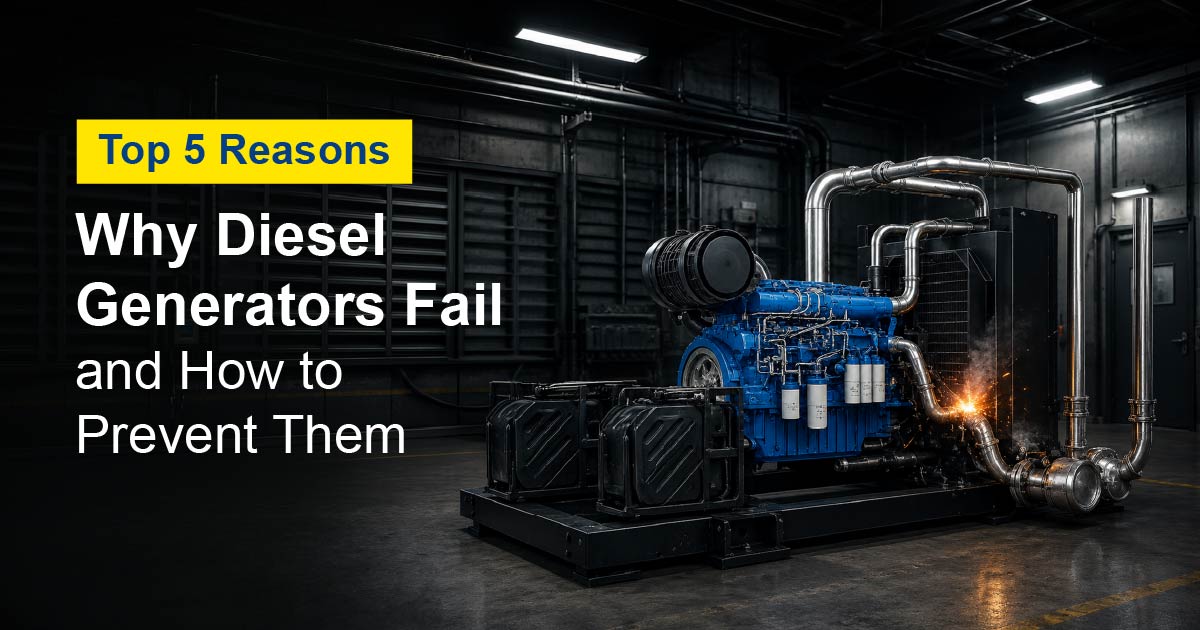
A diesel generator is often the last line of defence against power disruptions. Whether supporting a manufacturing plant, data centre, hospital or infrastructure project, it is expected to perform instantly when the grid fails. Yet, many cases of diesel generator failure can be traced back to preventable maintenance issues rather than engine defects.
Understanding the most common diesel engine problem helps facility managers and plant engineers reduce downtime, improve equipment reliability and extend engine life. Here are five leading causes of generator failure and the preventive measures that keep your power systems running reliably.
The Most Common Causes of Diesel Generator Failures
While diesel generators are engineered for dependable performance, avoidable maintenance lapses remain the leading cause of unexpected failures. The following are the five most common reasons generators fail and the practical steps that help prevent them, ensuring reliable power whenever it is needed.
1. Battery Failure
If a diesel generator is not starting, the battery should be the first component to inspect. In standby applications, generators may remain idle for weeks or months, allowing batteries to discharge gradually or develop corrosion at the terminals.
Common causes include:
- Low battery charge
- Loose or corroded terminals
- Faulty battery charger
- End-of-life battery
Prevention
Carry out routine battery voltage checks, inspect terminals for corrosion and test the charging system during scheduled maintenance. Replacing ageing batteries before they fail is far less expensive than unexpected downtime during a power outage.
2. Fuel Contamination
Clean fuel is essential for reliable engine performance. Water, dirt and microbial contamination can clog filters, damage injectors and reduce combustion efficiency. Over time, contaminated fuel becomes a major diesel engine problem that affects both performance and reliability.
Fuel contamination is especially common where diesel is stored for long periods without proper treatment or tank maintenance.
Prevention
Maintain clean fuel storage tanks, drain water separators regularly and replace fuel filters at recommended service intervals. Periodic fuel quality testing also helps identify contamination before it affects engine performance.
3. Wet Stacking from Low-Load Operation
Wet stacking occurs when a diesel engine for generator applications operates continuously below its recommended load. Incomplete combustion allows unburnt fuel, soot and carbon deposits to accumulate in the exhaust system, turbocharger and injectors.
Common signs include:
| Indicator | Operational Impact |
| Black exhaust smoke | Poor combustion efficiency |
| Carbon deposits | Reduced engine performance |
| Increased fuel consumption | Higher operating costs |
| Fouled injectors | More frequent maintenance |
Prevention
Operate generators at their recommended load whenever possible. Regular load-bank testing helps maintain proper combustion temperatures and prevents carbon build-up in standby generators that rarely operate under full load.
4. Coolant Leaks and Overheating
The cooling system plays a critical role in maintaining stable operating temperatures. Even a minor coolant leak can lead to overheating, accelerated component wear and, in severe cases, catastrophic engine damage.
Cooling system issues may result from deteriorated hoses, leaking water pumps, damaged radiators or insufficient coolant levels.
Prevention
Inspect coolant levels before operation, examine hoses and clamps for wear and pressure-test the cooling system during scheduled servicing. Replacing worn cooling components before failure protects the engine from expensive repairs and unplanned shutdowns.
5. Generator Overloading
Every generator is designed to operate within a specified capacity. Running beyond that limit for prolonged periods places excessive stress on the engine, alternator and cooling system.
Repeated overloading may result in:
- Reduced engine life
- Excessive fuel consumption
- Higher operating temperatures
- Increased risk of diesel generator failure
Prevention
Accurately assess your facility’s load requirements before generator selection. Regular load analysis and preventive maintenance ensure the generator continues to operate within its designed performance envelope.
Preventive Maintenance: The Best Defence Against Generator Failure
Most generator failures are preventable through a structured maintenance programme. Routine inspections allow operators to identify small issues before they become costly breakdowns.
| Maintenance Activity | Recommended Benefit |
| Battery inspection | Reliable engine starting |
| Fuel system maintenance | Improved combustion and injector protection |
| Oil and filter replacement | Reduced engine wear |
| Coolant inspection | Stable operating temperature |
| Load-bank testing | Prevention of wet stacking |
| Inspection of genuine service parts | Improved reliability and longer service life |
Preventive servicing not only reduces repair costs but also improves equipment availability and supports better total cost of ownership throughout the generator’s lifecycle.
Conclusion
Reliable backup power depends on more than installing a quality generator. Consistent maintenance, timely inspections and the use of quality replacement parts are essential to preventing common issues such as wet stacking, battery failure, fuel contamination, coolant leaks and overloading.
As one of the trusted diesel engine manufacturers in India, Baudouin India combines more than 100 years of global engineering expertise with solutions tailored for Indian operating conditions. Every Baudouin engine is designed for dependable performance in generator, industrial and marine applications, supported by a nationwide service network and genuine parts availability. For organisations seeking a dependable diesel engine for generator applications, partnering with an experienced manufacturer helps maximise uptime, improve operational efficiency and ensure reliable power whenever it matters most.